
O naira. On-chain. Na Bantu.
A cNGN é a primeira stablecoin africana regulada indexada ao naira — paridade 1:1 com o NGN, supervisionada no âmbito do quadro de Incubação Regulatória da SEC nigeriana e do piloto AML/CFT/CPF do CBN. É emitida nativamente na blockchain Bantu e distribuída por outras chains através de bridges, para que um único naira em conformidade on-chain possa liquidar onde quer que os criadores estejam.
O Naira em Conformidade. a primeira stablecoin africana regulada indexada ao naira — paridade 1:1 com o NGN, emitida nativamente na Bantu, distribuída onde quer que os criadores estejam.
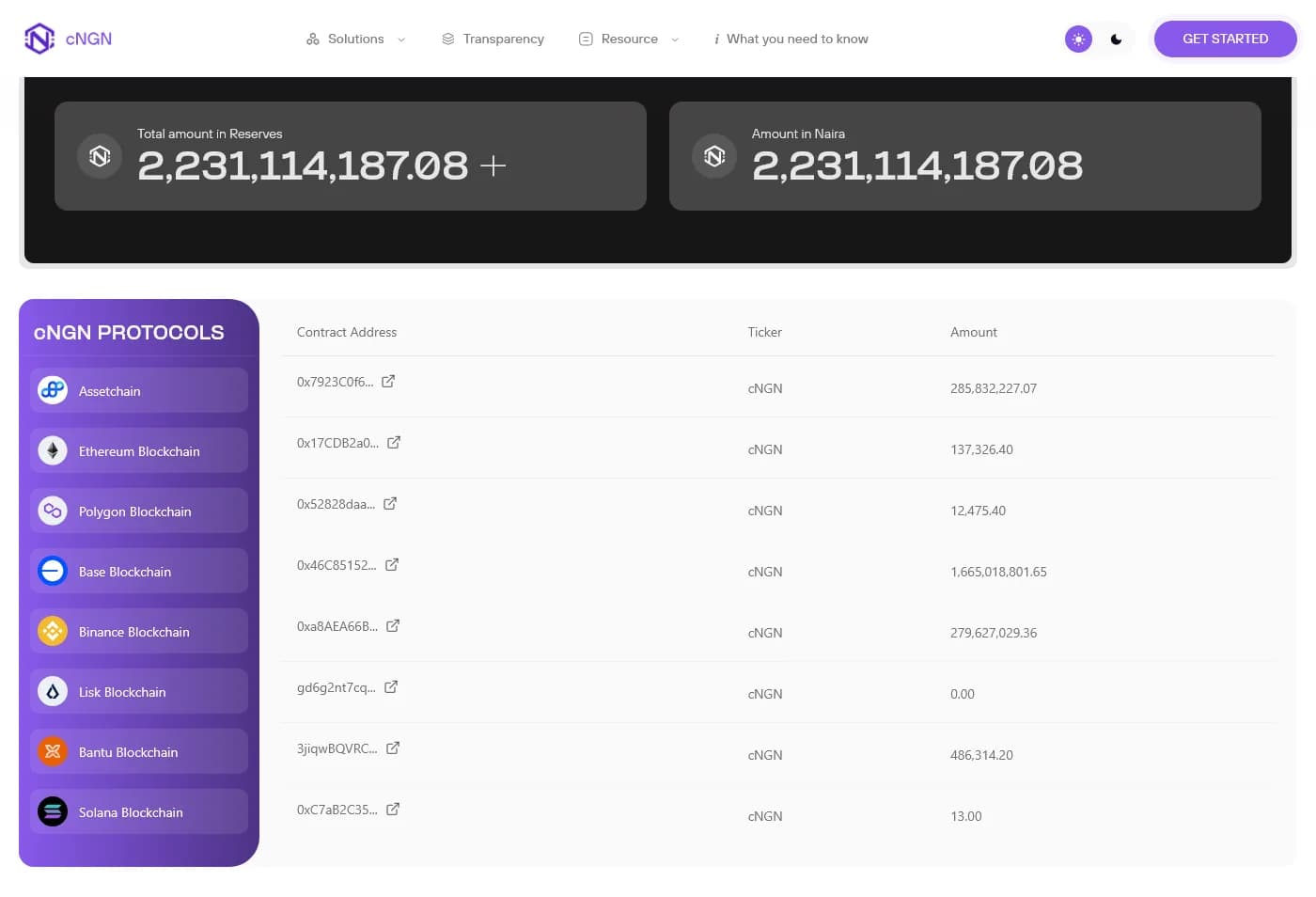
Supervisionada no âmbito do quadro de Incubação Regulatória da SEC nigeriana e do piloto AML/CFT/CPF do CBN. Com bridge para Ethereum, BSC, Polygon, Tron e Base.
Verificável à vista de todos.
O naira on-chain. Emitir ou resgatar pelo valor nominal.
Securities & Exchange Commission da Nigéria · Incubação Regulatória.
Banco Central da Nigéria — supervisão de VASP.
Emitida canonicamente na Bantu; com bridge para chains EVM.
Emitida na Bantu. Distribuída em todo o lado.
- // Camada 1 · Emissão canónicaA cNGN é cunhada na blockchain Bantu
Cada cNGN existente é emitida contra um depósito em naira correspondente, na Bantu, sob controlos regulados. O registo Bantu é a fonte de verdade única para a oferta em circulação.
- // Camada 2 · BridgesBloqueada na Bantu, espelhada noutro lado
Os contratos de bridge bloqueiam a cNGN na Bantu e cunham uma representação equivalente na chain de destino. Inverta o movimento para a trazer de volta. O mesmo naira, carris diferentes — nunca uma cunhagem fantasma.
- // Camada 3 · ComposiçãoOnde quer que os seus utilizadores estejam
Carteiras, DEX, processadores de pagamento e protocolos DeFi nas chains EVM podem integrar a cNGN com as suas ferramentas existentes — sem necessidade de migrar para uma nova chain para usar uma stablecoin nigeriana.
Como se mantém a paridade 1:1.
Cobertura integral em naira
Cada cNGN em circulação está coberta por um naira equivalente mantido em reserva. Sem emissão fracionada, sem ginástica algorítmica. A oferta acompanha a procura real — não o alarido.
Emitir e resgatar pelo valor nominal
Traga naira, receba cNGN. Traga cNGN, receba naira. A taxa de câmbio não é um mercado — é o protocolo. Sai o mesmo montante que entrou.
Reservas segregadas
A cobertura em naira é mantida separada das contas operacionais. As reservas não são gastas, emprestadas nem usadas em operações. Ficam ali, sem fazer mais nada além de cobrir o flutuante.
Atestação pública
São publicados relatórios de atestação regulares — oferta, cobertura e circulação, registados oficialmente. Emissão regulada significa que os livros estão abertos por conceção.
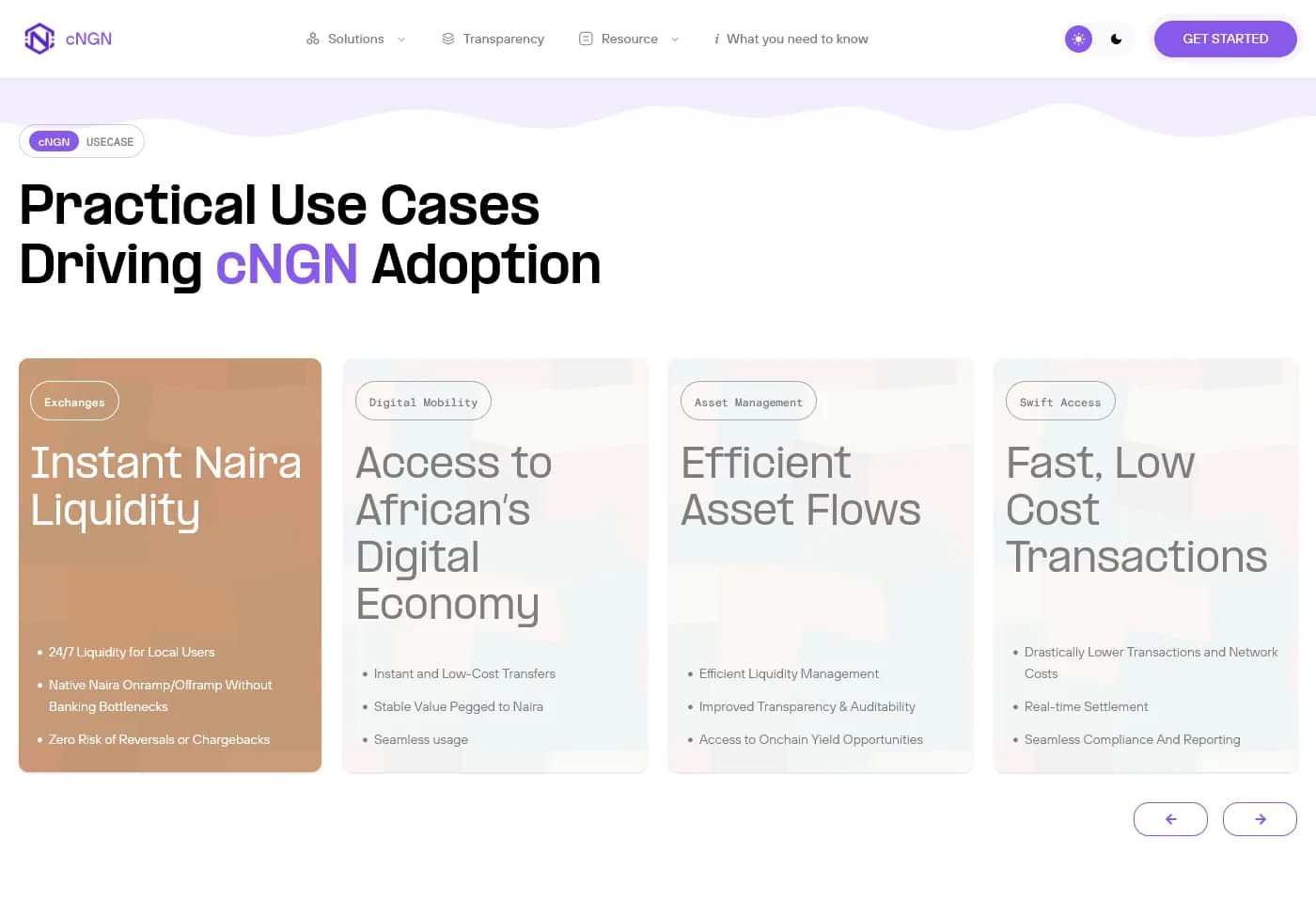
O que a cNGN desbloqueia.
Liquidação de comerciantes
Quando os cartões são revertidos, falham ou liquidam em janelas T+2, a cNGN move-se on-chain e finaliza em segundos. Os fornecedores são pagos antes de o cliente sair.
Transfronteiriço, ancorado ao naira
Fluxos de entrada e saída em conformidade que mantêm o valor denominado em NGN até à rampa de saída — menos saltos de correspondência, prazos previsíveis, estrutura de comissões mais clara.
DeFi numa stablecoin regulada
Pools de liquidez, swaps, mercados de empréstimo — construídos em torno de um ativo estável denominado em naira em vez de encaminhar cada posição através da exposição ao dólar.
Tesouraria empresarial
Detenha naira operacional on-chain. Mova-o entre subsidiárias ao fim de semana. Comprima a reconciliação. Mantenha-se dentro do quadro cambial local enquanto ganha liquidação 24/7.
Rampas de entrada e saída
Uma transferência bancária à entrada. Depois disso, a cNGN funciona como uma camada ágil indexada ao naira entre a sua conta bancária e a economia on-chain mais ampla — sem o salto banco-ativo a cada movimento.
Transferências humanitárias e sociais
Dinheiro condicional com regras programáveis — desembolsado apenas para categorias elegíveis, no prazo, com um rasto on-chain auditável que cada doador pode verificar.
Se o dinheiro pudesse seguir regras, o que escreveria?
when (lastBusinessDay(month)) {
  for (employee in roster) {
    if (employee.active) {
      send(
        amount: employee.salary,
        token: cNGN,
        to:    employee.wallet,
        memo:  "Payroll · " + month
      )
    }
  }
}
Estilizado a título ilustrativo. Os contratos reais vivem na EXPANSION API ou na camada de smart contracts da chain de destino.
- Salários agendados
Salários libertados para as carteiras no último dia útil do mês — sem processamento manual, sem execuções falhadas.
- Empréstimo condicional
Reembolsos deduzidos automaticamente quando o rendimento chega à carteira; termos flexíveis codificados uma vez, aplicados para sempre.
- Pagamentos a fornecedores com garantia bloqueada
O comércio eletrónico só liberta aos vendedores depois de um oráculo de entrega confirmar a receção. As disputas diminuem. A confiança acumula-se.
- Financiamento coletivo com lógica de reembolso
Atinja o objetivo até ao prazo — os fundos são libertados. Falhe-o — cada contribuidor é reembolsado automaticamente. Sem intermediários de plataforma.
- Distribuição de ajuda direcionada
Desembolsos que só podem ser gastos em alimentação, educação ou habitação — com filtros de localização e categoria integrados na lógica do token.
Em conformidade. Não controlada.
| Cripto comum | cNGN | CBDC (eNaira) | |
|---|---|---|---|
| Estabilidade | Volátil por conceção | Paridade 1:1 NGN, coberta por fiduciário | Naira digital soberano (eNaira) |
| Regulação | Frequentemente não regulada | Programa SEC RI · supervisão do CBN | Emitida pelo banco central |
| Programável | Depende da chain | Sim — smart contracts na Bantu e chains EVM | Limitada; regras controladas pelo soberano |
| Multi-chain | Varia | Emitida na Bantu, com bridge para chains EVM | Registo soberano único |
| Operador | Por vezes anónimo | Emitente privado em conformidade, atestação pública | Banco central |
| Chain pública | Sim (tipicamente) | Sim — pública, auditável | Não — registo fechado |
Como obter cNGN.
Emissão direta via Painel cNGN
Para empresas, comerciantes e utilizadores verificados. KYC, depósito de NGN numa conta bancária designada, emissão de cNGN a 1:1, levantamento para a sua carteira. O resgate funciona da mesma forma em sentido inverso. Adequado a tesouraria, fornecedores de liquidez, emitentes institucionais.
cngn.co →Exchanges centralizadas
Várias exchanges nigerianas e focadas em África listam agora a cNGN. A via mais simples para utilizadores que querem exposição sem tocar nos fluxos de emissão — e uma rampa de entrada/saída prática para produtos na fase de tração inicial.
Ver listagens →DEX e protocolos DeFi
À medida que a liquidez cresce, a cNGN torna-se um bloco de construção — rotas de swap, pools de liquidez, mercados de empréstimo, liquidação programática. O ponto em que deixa de ser um token que se detém e passa a ser infraestrutura com que se compõe.
Documentação para programadores →O naira é uma das moedas mais usadas de África. Agora está on-chain.
As stablecoins em moeda local são a forma de a finança blockchain se tornar útil aos 1,7 mil milhões de adultos que não transacionam em dólares. Liquidação ancorada ao naira, tesouraria denominada em naira, DeFi cotada em naira — sem ter primeiro de converter o seu modelo mental ou os seus livros.
Mercado formal de remessas de África projetado para 2035 (face a 100 mil M$ em 2022).
Adultos a nível mundial sem conta bancária — o público que as stablecoins em moeda local foram construídas para alcançar.
Liquidação no próprio dia, numa chain pública, com histórico on-chain auditável.
Liquidação que não pára aos fins de semana, feriados ou janelas de banca correspondente.
Integre o naira regulado on-chain.
Quer esteja a construir uma carteira, uma camada de liquidação, um protocolo DeFi ou um produto de pagamentos — a cNGN está em funcionamento, a documentação está aberta e os carris estão a funcionar. Comece onde está; a Fundação Bantu está aqui para ajudar com tudo o que for ao nível do protocolo.