
Naira. On-chain. On Bantu.
cNGN is Africa's first regulated naira-pegged stablecoin — 1:1 to NGN, supervised under the Nigerian SEC's Regulatory Incubation framework and the CBN's AML/CFT/CPF pilot. It is issued natively on the Bantu blockchain and distributed across other chains via bridges, so a single compliant naira-on-chain can settle anywhere builders are.

The Compliant Naira. Africa's first regulated naira-pegged stablecoin — 1:1 to NGN, issued natively on Bantu, distributed everywhere builders are.
Supervised under the Nigerian SEC's Regulatory Incubation framework and the CBN's AML/CFT/CPF pilot. Bridged to Ethereum, BSC, Polygon, Tron, and Base.
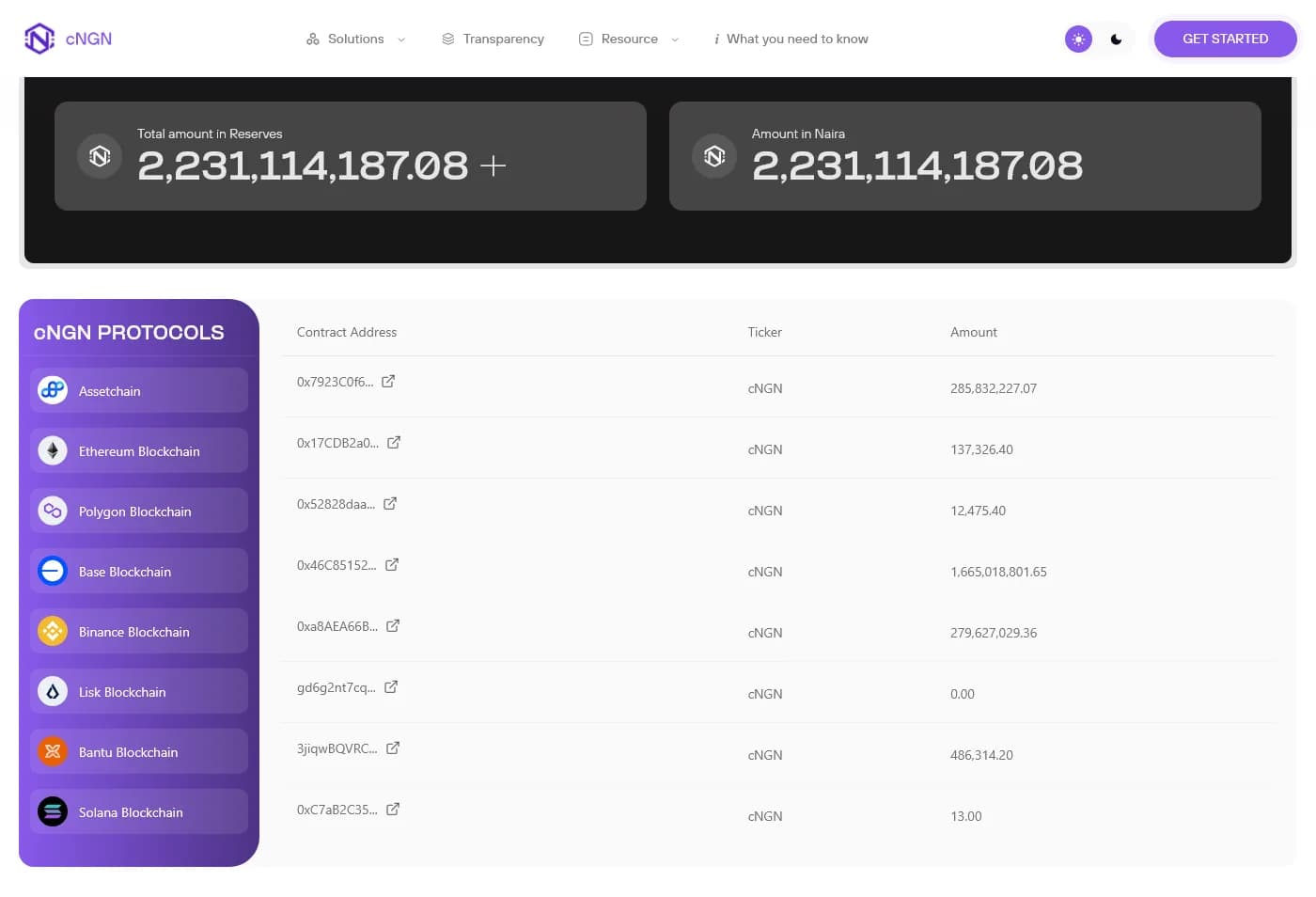
Verifiable in the open.
Naira on-chain. Mint or redeem at face value.
Nigerian Securities & Exchange Commission · Regulatory Incubation.
Central Bank of Nigeria — VASP supervision.
Canonically issued on Bantu; bridged to EVM chains.
Issued on Bantu. Distributed everywhere.
- // Layer 1 · Canonical issuancecNGN is minted on the Bantu blockchain
Every cNGN in existence is issued against a corresponding naira deposit, on Bantu, under regulated controls. The Bantu ledger is the single source of truth for circulating supply.
- // Layer 2 · BridgesLocked on Bantu, mirrored elsewhere
Bridge contracts lock cNGN on Bantu and mint an equivalent representation on the destination chain. Reverse the move to bring it home. Same naira, different rails — never a phantom mint.
- // Layer 3 · CompositionWherever your users are
Wallets, DEXs, payment processors, and DeFi protocols on EVM chains can integrate cNGN against their existing tooling — no need to relocate to a new chain to use a Nigerian stablecoin.
How the 1:1 peg holds.
Full naira backing
Every cNGN in circulation is backed by an equivalent naira held in reserve. No fractional issuance, no algorithmic gymnastics. Supply moves with real demand — not with hype.
Mint & redeem at face value
Bring naira, get cNGN. Bring cNGN, get naira. The exchange rate isn't a market — it's the protocol. The same amount comes out as went in.
Segregated reserves
Naira backing is held separate from operational accounts. Reserves are not spent, lent, or operated against. They sit there, doing nothing but backing the float.
Public attestation
Regular attestation reports are published — supply, backing, and circulation, on the record. Regulated issuance means the books are open by design.
What cNGN unlocks.
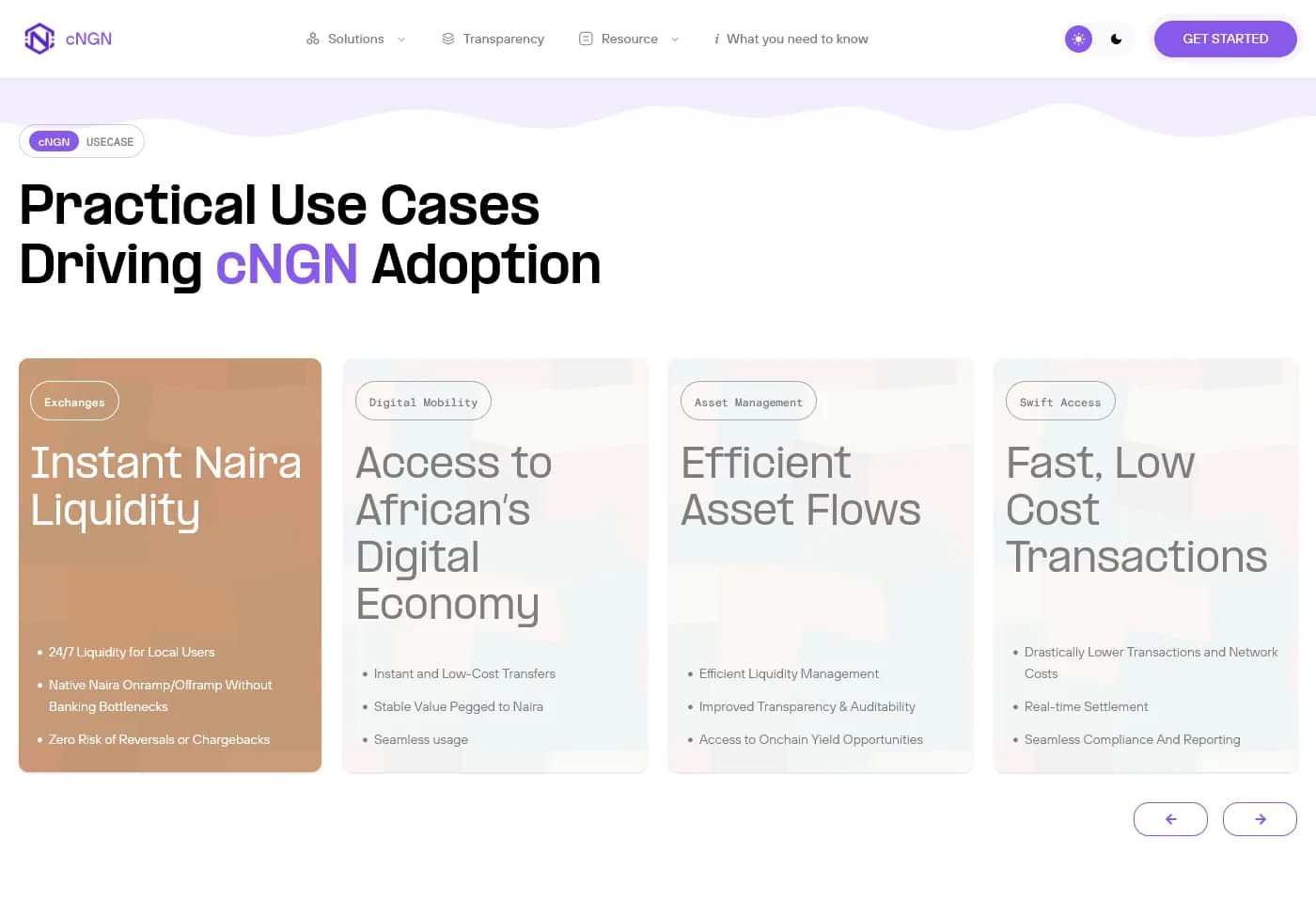
Merchant settlement
When cards reverse, fail, or settle on T+2 windows, cNGN moves on-chain and finalizes in seconds. Vendors get paid before the customer leaves.
Cross-border, naira-anchored
Compliant inbound and outbound flows that keep value denominated in NGN until the exit ramp — fewer correspondent hops, predictable timing, clearer fee structure.
DeFi on a regulated stablecoin
Liquidity pools, swaps, lending markets — built around a naira-denominated stable asset instead of routing every position through dollar exposure.
Corporate treasury
Hold operational naira on-chain. Move it between subsidiaries on weekends. Compress reconciliation. Stay inside the local FX framework while gaining 24/7 settlement.
On & off ramps
One bank transfer in. After that, cNGN sits as a nimble naira-pegged layer between your bank account and the broader on-chain economy — without the bank-to-asset hop on every move.
Humanitarian & social transfers
Conditional cash with programmable rules — disbursed only for eligible categories, on schedule, with an auditable on-chain trail every donor can verify.
If money could follow rules, what would you write?
when (lastBusinessDay(month)) {
  for (employee in roster) {
    if (employee.active) {
      send(
        amount: employee.salary,
        token: cNGN,
        to:    employee.wallet,
        memo:  "Payroll · " + month
      )
    }
  }
}
Stylized for illustration. Real contracts live in the EXPANSION API or the destination chain's smart-contract layer.
- Payroll on a schedule
Salaries released to wallets on the last business day of the month — no manual processing, no missed runs.
- Conditional lending
Repayments deducted automatically when income hits the wallet; flexible terms encoded once, enforced forever.
- Escrowed vendor payments
E-commerce releases to sellers only after a delivery oracle confirms receipt. Disputes drop. Trust compounds.
- Crowdfunding with refund logic
Hit the goal by the deadline — funds release. Miss it — every contributor is refunded automatically. No platform middlemen.
- Targeted aid distribution
Disbursements that can only be spent on food, education, or housing — with location and category filters built into the token logic.
Compliant. Not controlled.
| Regular crypto | cNGN | CBDC (eNaira) | |
|---|---|---|---|
| Stability | Volatile by design | 1:1 NGN peg, fiat-backed | Sovereign digital naira (eNaira) |
| Regulation | Often unregulated | SEC RI program · CBN supervision | Central bank issued |
| Programmable | Depends on the chain | Yes — smart contracts on Bantu & EVM chains | Limited; sovereign-controlled rules |
| Multi-chain | Varies | Issued on Bantu, bridged to EVM chains | Single sovereign ledger |
| Operator | Sometimes anonymous | Compliant private issuer, public attestation | Central bank |
| Public chain | Yes (typically) | Yes — public, auditable | No — closed ledger |
How to get cNGN.
Direct mint via cNGN Dashboard
For businesses, merchants, and verified users. KYC, deposit NGN to a designated bank account, mint cNGN 1:1, withdraw to your wallet. Redemption runs the same way in reverse. Suits treasury, liquidity providers, institutional issuers.
cngn.co →Centralized exchanges
Several Nigerian and Africa-focused exchanges now list cNGN. The easiest route for users who want exposure without touching mint flows — and a practical on/off-ramp for products in the early-traction phase.
See listings →DEXs & DeFi protocols
As liquidity grows, cNGN is becoming a building block — swap routes, liquidity pools, lending markets, programmatic settlement. The point at which it stops being a token you hold and starts being infrastructure you compose with.
Developer docs →The naira is one of Africa's most-used currencies. Now it's on-chain.
Local-currency stablecoins are how blockchain finance becomes useful to the 1.7 billion adults who do not transact in dollars. Naira-anchored settlement, naira-denominated treasury, naira-priced DeFi — without first converting your mental model or your books.
Projected Africa formal remittance market by 2035 (vs. $100B in 2022).
Adults globally without a bank account — the audience local-currency stablecoins are built to reach.
Same-day settlement, on a public chain, with auditable on-chain history.
Settlement that does not pause on weekends, holidays, or correspondent banking windows.
Integrate the regulated naira-on-chain.
Whether you're building a wallet, a settlement layer, a DeFi protocol, or a payments product — cNGN is live, the documentation is open, and the rails are running. Start where you are; the Bantu Foundation is here to help with anything protocol-level.